
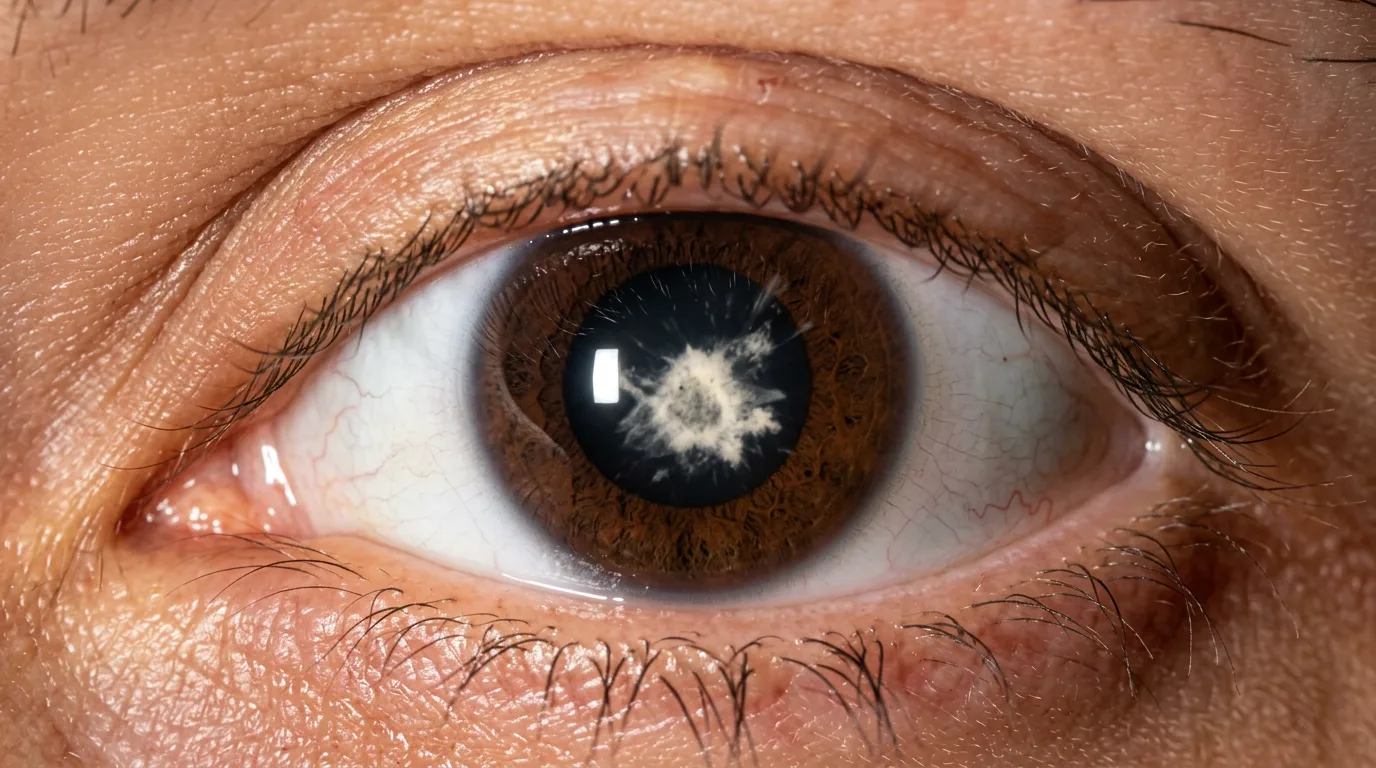
There is a sentence patients hear very often in the consulting room, and it stays in their head for weeks afterwards: "You have a cataract, but you can still wait." What is rarely taken from it is the part that actually matters, and that is how long. A week? A year? Until I stop seeing? Most people leave the consulting room with a diagnosis, with a feeling of relief that nothing is urgent, and with one vague plan to deal with it "when it gets worse."
The decision on the timing of surgery at the VIDAR-ORASIS SWISS Special Eye Hospital in Novi Sad is made by ophthalmologists with many years of experience in cataract surgery. The hospital was founded in 2010, and among the surgeons there are four university professors. What follows is the framework by which that decision is actually made in the consulting room, and not a shortened answer that fits into a single sentence.
Then a year passes. Then another. Driving at night slowly narrows down to driving to the shop and back, and only during the day. The book is replaced by the television. A walk in the rain becomes a risk that makes staying at home the easier choice. None of that happens in a single day. That is why it is not experienced as deterioration, but as adaptation. And that is exactly why the question of the right moment for cataract surgery is harder than it looks: there is no day on which something clearly tells you "now."
This article is written for a person who already has a diagnosis and who is postponing. The aim is not to convince you to have surgery immediately, nor to frighten you. The aim is to give you the framework for thinking that ophthalmologists really use: not how "ripe" the cataract is, but how much it bothers you. This is a change of approach that happened gradually in ophthalmology over the past decades, but it reached patients slowly, because families still retell the experience of grandparents from a time when surgery really did wait for the cataract to "ripen."
In this article we will go through what it even meant for a cataract to be ripe and why this is seen differently today, which concrete life situations are used to judge that the time has come, when postponing carries real inconveniences, when earlier surgery is a reasonable choice, and what changes when you have glaucoma or diabetes alongside the cataract. We will also explain what the examination at which this decision is made looks like, because it is an examination that differs from an ordinary annual check-up.
One thing should be clear straight away: no article can tell you whether your time has come. Only a doctor who looks at your eye and listens to how you live can do that. But you can come to that examination considerably better prepared than you otherwise would, and that is what this article is for.
What it means for a cataract to be "ripe"
To understand why the decision is made differently today, we should first clarify where the expression "ripe cataract" comes from at all.
A cataract, known colloquially in Serbia as mrena, is a clouding of the lens of the eye. The lens is a transparent structure roughly the size of a bean, positioned behind the pupil. Together with the cornea (the transparent front part of the eye, something like the glass on a watch), it refracts light and focuses the image onto the retina, the thin layer at the back wall of the eye that turns that image into a signal for the brain. When the lens stops being clear, light scatters inside it instead of passing through cleanly, and the image that reaches the retina is paler, with less detail and less contrast.
That clouding is not a condition that happens overnight. It progresses over years, and in some people over decades. In the course of that progression the lens does not only cloud: it also becomes harder and denser. The expression "ripe cataract" describes an advanced stage in which the lens is clouded throughout its whole mass, dense and hard, and vision is reduced to distinguishing light from dark and hand movement in front of the eye. The term "hypermature" was also used, for an even later stage in which the lens begins to change structurally as well.
Why waiting really was the rule in the past
Waiting for ripeness was not a doctor's whim. It was a logical consequence of the technique used at the time.
At the time when a cataract was operated on by removing the whole lens, together with the capsule that surrounds it, through a large incision in the eye, the technique required the lens to be firm and whole. A soft, only partly clouded lens was harder to remove in one piece. The incision was large, sutures were obligatory, recovery was long, and the hospital stay was measured in days. With such a procedure it made sense to wait for vision to fall low enough for the gain from surgery to outweigh its risk and unpleasantness.
That is why generations of patients grew up with a rule passed on by word of mouth: let it ripen, and then act. That rule was correct in its own time. The problem is that it outlived the technique that created it.
What changed in the meantime
Modern cataract surgery is performed with a technique in which the clouded lens is broken down into tiny pieces by ultrasound and drawn out of the eye by aspiration, while the natural capsule of the lens stays in place and an intraocular lens (an artificial lens that remains permanently in the eye) is implanted into it. That technique is called phacoemulsification and is described in the literature as the standard method for cataract surgery, which is information your doctor should confirm.
For the question of the right moment, one consequence of that change matters most: the technique no longer asks for a hard lens. On the contrary. A soft, moderately clouded lens breaks down more easily and is removed more easily. A hard lens that has been waited on for a long time requires more ultrasound energy and more time.
This means that the old criterion has practically been turned on its head. In the past people waited because the technique liked a ripe lens. Today people do not wait, among other reasons because the technique would rather work with a less ripe one.
What "ripe cataract" means today in a conversation with a patient
In everyday conversation the expression has remained, but it has lost its original meaning. When someone today says "it is not ripe yet," they most often mean that the clouding is not that pronounced, that is, that vision has not fallen much yet. That is legitimate information about the state of the lens, but on its own it is not an answer to the question of whether to operate.
Imagine two men with almost identical findings. One is sixty two years old, still works, drives the Novi Sad-Belgrade route several times a week, in the evening and in the rain, and looks at a screen all day. The other is eighty one, does not drive, rarely goes out alone, watches television from two metres away and enjoys the company of the household. The same degree of clouding does not mean anywhere near the same thing to those two people. For the first it is already a serious hindrance and a risk, for the second perhaps it is not yet.
That is why the decision on the timing of surgery today is not made by looking only at the lens, but by looking at the lens and at the patient's life at the same time. You can read more about the clouding itself and its types on the page about cataract, and if you are not sure whether what you feel corresponds to a cataract at all, the article on what vision with a cataract looks like is useful too.
The internal criterion of "below fifty percent of visual function"
In earlier practice a criterion was mentioned by which surgery is indicated when the visual function of the eye falls below fifty percent. It is important that you know how to read that.
That is not a general international guideline, nor a rule that applies everywhere. It is an internal criterion, a reference point that helps standardise the decision in patients in whom there are no other particular circumstances. Like any numerical reference point, it has a limitation: the number does not know what you do.
If you drive professionally, do precise work with your hands, read small markings or live alone in a house with steep stairs, the hindrance can be serious even before any number shows it. If, on the other hand, your day does not demand much of your vision and you feel entirely functional, a lower number does not automatically mean that you have to be on the table tomorrow.
That is why this criterion should be understood as one of the pieces of information in the decision, and not as a threshold that in itself opens or closes the door. Ask your doctor at the examination how it applies in your case.
How the impact on everyday life is assessed
This is the central question today and, in practice, the most useful part of the conversation with the doctor. Unfortunately, it is also the part patients most often skip, because they think the doctor is only interested in how many letters they read on the chart.
The letter chart measures visual acuity in ideal conditions: a well lit room, black letters on a white background, maximum contrast, no glare, no hurry. Life does not look like that. In life objects are grey on grey, light comes in at a bad angle, headlights from the opposite direction dazzle, and a decision has to be made in a second. That is why it happens that the finding says vision is decent, while the person knows that their vision is a problem. Both impressions can be correct, they simply measure different things.
Because of this you should come to the examination with concrete examples, and not with the general sentence "I see worse." Here are the situations that say the most.
Driving, especially at night and in bad weather
Driving is the most sensitive test for an eye with a cataract, because it demands acuity, contrast and resistance to glare all at the same time.
A clouded lens scatters light. When the headlight of a car from the opposite direction hits you in the face, that light spreads inside the eye across the whole image instead of staying a point. The result is that for a moment you do not see the edge of the road, the pedestrian on the crossing or the markings on the carriageway. The same thing happens on wet asphalt that reflects street lights and in strong low sun.
Questions worth asking yourself honestly: have you stopped driving at night and explained it to yourself by saying that you do not feel like going out anyway? Do you avoid the motorway or unfamiliar routes? Does it happen that you read a road sign later than your passenger?
If the answer to any of these questions is yes, that is information the doctor has to hear, regardless of how many letters you read. Driving is not only a question of your comfort, but also a question of the safety of other people on the road.
Reading, small print and work at the computer
The second big test is work with details at close range. Here we are not talking only about books.
Labels on products in the shop. The leaflet for a medicine and splitting a tablet in half. Codes on an invoice. Stitches when sewing. The colours of wires during repairs at home. A prescription written by hand. Messages on the phone that you had to enlarge.
With work at the computer the problem often shows itself first as fatigue, and not as blurring. After an hour a person has to take a break, the eyes burn, the zoom keeps increasing, the lamp keeps being moved. If your working day lasts the same but you are more tired than before, it is worth checking how much of that tiredness comes from the eyes.
The risk of falls in older people
This is the part the family often recognises before the patient does and the part that is talked about least.
When contrast sensitivity declines, the first things to disappear from the image are edges: the edge of a step, the threshold between two rooms, the edge of the pavement, the border between a carpet and the floor, a transparent glass door, a wet spot on tiles. All of these are grey on grey. The person does not feel that they see worse, but becomes more cautious, slower and less confident in moving, and then explains it to themselves as age.
If your parent starts holding on to the wall on the stairs, if they avoid going out after dark, if they have started to stumble or have already had a fall, that is not necessarily only a question of balance. Vision plays a part in it. A fall in an older person can have serious consequences, and that is one of the most serious arguments against further postponement, something that should be discussed openly with the doctor.
Work and independence
If you still work, the question is very practical: is your vision starting to limit you in what your job is?
People working in the field, drivers, tradespeople, people who work with machines, medical staff, people who work with small materials, all of them have a lower threshold of tolerance than someone whose job does not depend on fine vision. The same applies to independence outside work: whether you still go shopping on your own, pay bills, take your therapy without help, cook for yourself.
Loss of independence does not happen all at once. It happens by one activity after another being quietly handed over to someone else. It is worth making a list of the things you have stopped doing on your own in the past two years and looking at how many of them depend on vision.
Hobbies and what makes you content
This is rarely mentioned at the examination, because patients think it is not "medically serious." It is serious.
If you have stopped reading, playing cards, knitting, going fishing or recognising the faces of acquaintances in the street so that you feel uncomfortable going out, that is a real loss of quality of life. In older people withdrawal from activities also carries consequences that have nothing to do with the eyes. It is useful for the doctor to hear what you have stopped doing: that often says more about the degree of hindrance than any number.
A practical way to measure this yourself
Before the examination take a piece of paper and write three columns.
In the first write the activities you do without any difficulty. In the second those you do, but with an adaptation: stronger light, larger font, more slowly, with someone's help, only during the day. In the third those you have completely stopped doing because of your vision.
If the third column is empty and the second is short, you probably have room to monitor the situation calmly. If the second column grows from month to month and the third is filling up, that is your answer, and that is independent of what the finding says. Take that piece of paper to the examination and show it to the doctor. It will save you both time.
What about the other eye
Another thing that misleads. A cataract rarely progresses at the same speed in both eyes. While one eye works decently, it compensates for the weaker one and the person has no clear sense of how much they have lost.
That is why a simple test at home is useful: cover one eye with your palm, look around you, then swap. Many are surprised at how big the difference is. That is not a substitute for an examination, but it is a reminder that your impression of your own vision may be coming mostly from one eye.
Why waiting is not always harmless
Here we should be precise and honest, because it is easy to exaggerate on this topic in both directions.
In the great majority of people a cataract is not an urgent condition. It does not cause pain, it does not damage the retina simply by existing and it does not lead to sudden loss of vision. If your doctor told you that you can wait, at that moment they are most probably telling you the truth about your findings. Postponement of a few months is in the overwhelming majority of cases no drama at all and should not make you uneasy.
But "it is not urgent" and "it does not matter how long it lasts" are not the same sentence. There are several reasons why long, unmonitored postponement carries its own price.
A hard lens makes the procedure more demanding
This is the most important technical consequence. As the clouding progresses, the nucleus of the lens becomes denser and harder. In phacoemulsification, where the lens is broken down by ultrasound, a harder nucleus requires more energy and a longer working time inside the eye.
This does not mean that a hard cataract cannot be operated on, nor that something will necessarily go wrong. Operations on very advanced cataracts are performed regularly. It means that the procedure is more demanding, that it lasts longer and that the surgeon has less margin than when working with a softer lens. In some very hard cataracts a different approach is also considered, which the surgeon decides on the basis of the findings.
We deliberately do not quote figures on how much the risk changes. Such figures depend on many factors and it would not be fair to state them without a source. What you can do is to ask directly at the examination: "Is my cataract at a stage at which further waiting would make the procedure harder?" That is a question a doctor who has seen your eye can answer.
A poorer assessment of the state of the back of the eye
The lens is on the path of light in both directions. You look out through it, but the doctor also looks in through it.
When the clouding of the lens is severe, examination of the retina and the optic nerve becomes difficult. That matters because a cataract is not the only reason vision can weaken. Behind a clouded lens there may be a change in the macula, a consequence of diabetes or damage to the optic nerve, and these are exactly the conditions that substantially change expectations from surgery. If the back of the eye cannot be seen well, it is harder to say in advance how much vision surgery will really restore.
In patients who come early, the back of the eye can usually be examined without problems and the conversation about expectations is more precise.
Rare but real conditions in very advanced cataracts
In very advanced, hypermature cataracts, complications that the cataract itself can cause in the eye are also described, including a rise in eye pressure and inflammatory reactions. These are rare situations and they should not be mentioned as a threat to everyone who postpones for a year. But they exist and they are the reason a cataract is not left to progress without any monitoring.
If you have a diagnosis and decide to wait a while longer, agree with your doctor when you will come for a check-up. Postponement with regular check-ups and postponement without any check-up are not the same thing. The first is a legitimate plan, the second is the absence of a plan.
Time that does not come back
There is also a part that is not medical, but for many people it is decisive.
If you postpone surgery for three years, you have gained three years with poorer vision, and nobody gives those years back to you. In patients operated on after a long postponement the most frequent sentence after the procedure is not "it was terrible," but "why did I wait so long." We do not say this in order to apply pressure, but because it is heard too often in the consulting room and it would not be fair to keep quiet about it.
What postponement does not do
So that we do not leave the wrong impression, here is the other side too. Postponing cataract surgery does not damage the retina, it does not cause glaucoma in most people and it does not mean that you have missed an opportunity. Vision lost because of the clouding of the lens itself is not permanently lost in the way it is in damage to the optic nerve. If you have waited five years, you have not broken anything irreversibly and there is no reason for a feeling of guilt.
The point is not fear, but that the decision should be yours and conscious, and not the result of forgetting to come back for a check-up.
When earlier surgery is the better choice
There are situations in which earlier surgery is considered even before vision falls a lot. None of them is a rule that applies to everyone, but they are circumstances for which it is worth opening the conversation.
When the hindrance is great and the finding is "good"
The most frequent case. A person has solid acuity on the chart, and in life struggles because of glare and poor contrast. If the functional hindrance is clear and consistent, it is a legitimate reason for surgery, and that regardless of the fact that the number in the finding looks decent.
When the difference between the eyes is large
If one eye is considerably weaker than the other, the brain relies more and more on the image from the better eye. The consequence is a poorer assessment of depth and space, which is felt most when going down stairs, when pouring liquids, when parking and in a crowd. In such cases surgery on the weaker eye is often considered earlier.
When vision limits work or safety
Drivers, people who work with machines, people who work at height, people who do precise work and those who care for others have a lower threshold. The same applies to a person who lives alone and has to be independent in getting about.
When there is a risk of falling
In older people with an unsteady gait, earlier surgery is also considered as a measure that helps the safety of movement, because better contrast makes it easier to notice edges and obstacles. How much that means in your case is assessed by the doctor.
When the cataract interferes with monitoring another eye condition
If you have a condition that requires regular monitoring of the back of the eye, for example changes due to diabetes, a clouded lens can interfere with both the examination and any treatment. In such situations cataract surgery is sometimes performed earlier so that this monitoring can be done properly at all.
When the clouding is at the back of the lens
One type of clouding, the one that appears just under the back surface of the lens, tends to cause disproportionately large problems with little clouding, because it lies exactly on the axis of gaze. With that type the problems often appear earlier and progress faster, so the conversation about surgery is held earlier as well. Whether your clouding is of that type will be seen at the examination.
Book an examination for the assessment of cataract surgery. Call 021 63 61 222 and arrange an appointment at the VIDAR-ORASIS SWISS eye hospital at Bulevar oslobodjenja 76A in Novi Sad. We work on weekdays until 20:00. At the examination you will receive an assessment of the state of the lens and a conversation about whether in your case it is reasonable to wait or not. The examination does not commit you to booking a procedure.
When waiting makes sense
So that the picture is complete, we should also say when the decision to wait is entirely reasonable. An article claiming that everyone with a diagnosis has to go on the table immediately would not be honest.
Waiting is reasonable when your vision really does not get in your way. If you still drive as you drove and read as much as you read, there is no reason to hurry. Clouding in itself is not a reason for a procedure if it does not create a problem.
Waiting also makes sense when there is a health circumstance that should be sorted out first. Unregulated blood sugar, uncontrolled blood pressure, active inflammation of the eye or some other condition that requires stabilisation can be a reason to postpone the procedure for a few weeks or months. Here it is not you who is postponing, but the postponement is planned, with a clear aim.
It is also reasonable to postpone because of life circumstances, within limits. If you have nobody to bring you and take you home, if you are in the middle of something you cannot interrupt, if you are travelling soon, an agreement with the doctor about an appointment in two or three months is a normal plan. The difference compared with bad postponement is that here there is a date.
Finally, waiting is reasonable when you are not sure. You have the right to think it over and to talk with your family. What is not good is for indecision to last for years without a single check-up. If you leave the conversation with your doctor without a date for the next check-up, you have not received a plan, but a postponement.
What if I also have glaucoma or diabetes
In patients who have another eye condition or general illness alongside the cataract, the question of timing becomes more complex and is not decided by a general rule. Here is what is useful to understand before the conversation with your doctor.
Cataract and glaucoma
Glaucoma is damage to the optic nerve that is most often connected with raised eye pressure and that leads to gradual, irreversible loss of the visual field. Unlike a cataract, vision lost because of glaucoma does not come back, so glaucoma has to be kept under control regardless of what is done with the lens. You can read in more detail about the condition itself on the page about glaucoma.
When a patient has both conditions, several questions open up in the conversation. The first is how much of the poorer vision comes from the lens and how much from the optic nerve, because cataract surgery can improve only the part that comes from the lens. The second is how the glaucoma is monitored, because therapy and check-ups remain after the procedure as well. The third is the order and the planning, which the doctor decides on the basis of your findings.
The combination of these two conditions is individual and requires assessment, so this article cannot tell you what is right for you. Be sure to ask your doctor how much vision the procedure is expected to improve and what happens to your pressure therapy after surgery.
Cataract and diabetes
Diabetes affects the eye in several ways. In people with diabetes clouding of the lens often appears earlier, and alongside that there is also the possibility of changes in the retina.
For the question of timing this means two things. The first is that the state of the retina should be assessed before the procedure, because it decisively affects how much vision will improve. The lens can be replaced perfectly and vision still remain limited if the retina is damaged. The second is that a clouded lens makes examination of the retina difficult, so long waiting tends to make monitoring of the diabetic eye disease itself harder as well.
In addition, in people with diabetes blood sugar regulation is looked at more carefully before the procedure, because it affects recovery. That is a conversation you have with your general practitioner or endocrinologist too, and not only with the ophthalmologist.
Other conditions that change the calculation
Something similar applies to other conditions. Changes in the macula, earlier operations or injuries of the eye, pronounced short-sightedness, dry eye and some therapies can affect the planning and the expectations. None of that is an obstacle automatically, but it is a reason to put everything openly on the table before setting an appointment.
That is why you should bring to the examination a list of the medicines you take, all earlier eye findings you have and information about chronic illnesses. That speeds up the process and reduces the possibility that something is overlooked.
What the assessment examination looks like
The examination at which it is assessed whether and when to operate on a cataract differs from an ordinary check-up. It does not serve only to establish that the clouding exists, because you most often already know that, but to answer three questions: how much the cataract really bothers you, what state the rest of the eye is in and, if the procedure goes ahead, what lens is needed.
A conversation about everyday life
The first part is a conversation. Here we come back to what we have already mentioned: which activities are difficult for you, what you have stopped doing, whether you drive, what you do for a living, what your usual day looks like. If you have brought the list of three columns, this is the moment to show it.
Measuring vision and checking the prescription
Next comes a check of visual acuity at distance and at near, with glasses and without them, and a check of whether vision can be improved with a new prescription. That matters because vision that improves with stronger lenses behaves differently from vision that can no longer be improved with lenses. If you have changed glasses several times in the past two years, say so.
Examination of the front part of the eye
On the biomicroscope, a device with a strong light and magnification on which you rest your chin and forehead, the doctor looks at the cornea, the anterior chamber of the eye and the lens itself. Here it is assessed where the clouding is located and how pronounced it is. The position of the clouding explains why someone with an apparently mild finding has great problems.
Measuring eye pressure
The pressure inside the eye is measured, often marked in the finding as IOP. That is a standard part of the examination and it is especially important in patients with glaucoma or suspected glaucoma.
Examination of the back of the eye with a dilated pupil
So that the retina and the optic nerve can be seen, drops that dilate the pupil are put into the eye. Their effect lasts several hours, during which near vision is blurred and sensitivity to light is increased. Because of this you should not drive that day and it is good to have someone with you. Bring sunglasses as well.
This part of the examination is key for realistic expectations. If the back of the eye is normal, the gain from surgery is more predictable. If there are changes, they should be discussed before, and not after, the procedure.
Ocular biometry
If things are moving towards surgery, biometry is done, a measurement of the length of the eye and the curvature of the cornea on the basis of which the power of the artificial lens to be implanted is calculated. How much prescription you are left with after the procedure depends on the accuracy of that measurement. You can read more about that measurement on the page about ocular biometry.
Here the conversation about the type of lens also opens, because different lenses give a different result at distance and at near. That choice is not made in a hurry on the day of surgery.
What you get at the end of the examination
At the end you should leave with three things: with clear information on what stage your cataract is at, with a recommendation on whether surgery is being considered now or the situation is being monitored, and with a date. If it is being monitored, the date is the date of the next check-up. If it is being operated on, the date is the appointment for the procedure and the list of preparations.
How long the procedure lasts and why that matters for the decision
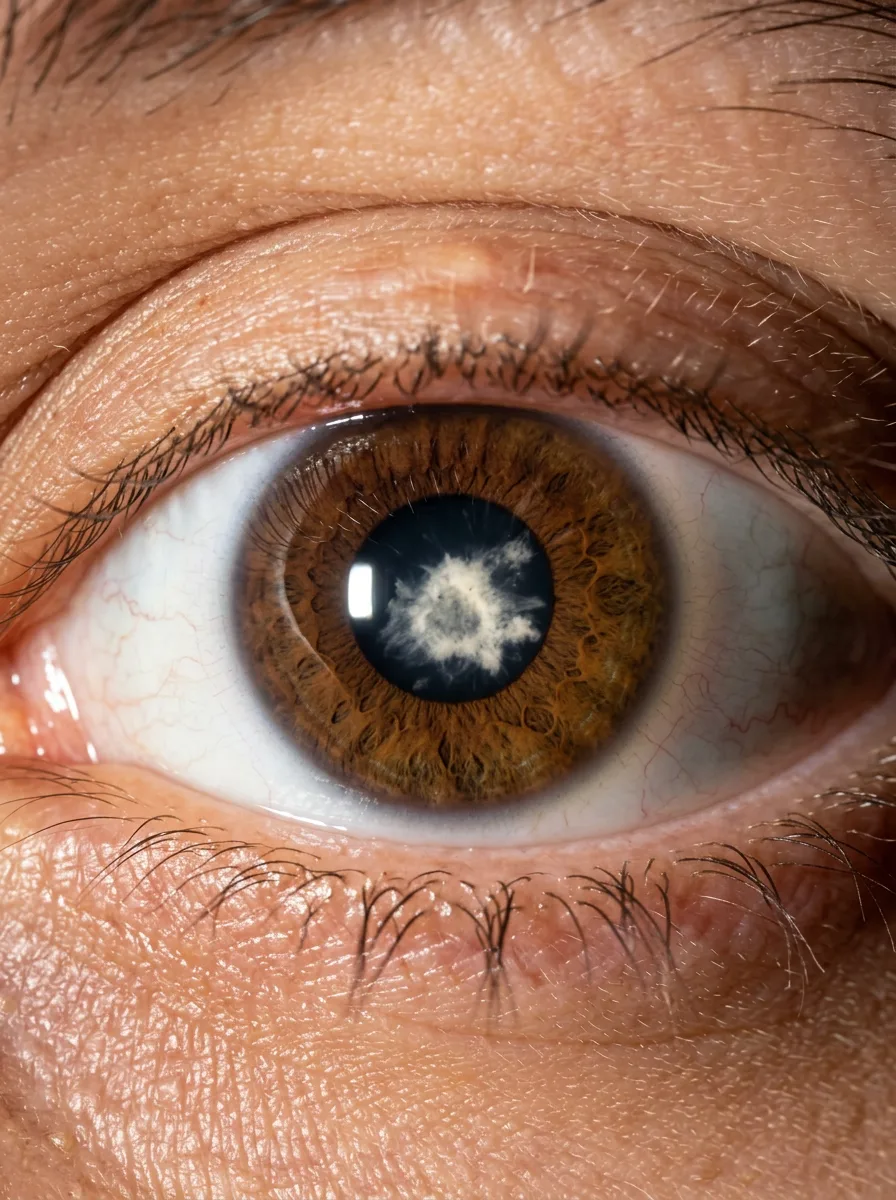
Many people postpone because in their head they have a picture of surgery from the stories of older members of the household: hospital, days of lying down, bandages on both eyes, a ban on moving. That picture is one of the most frequent reasons for dragging things out, so it is worth correcting.
Modern cataract surgery is performed under local anaesthesia, most often with drops, and the patient goes home the same day. The procedure itself lasts about fifteen minutes, although that is information your doctor should confirm, because the duration depends on the findings and on how hard the lens is. The stay at the clinic is longer than the procedure itself, because it includes preparation, the operation and a short period afterwards.
During the procedure you do not feel pain in the way you expect it, but you do feel touch and pressure and you see a strong light. Discomfort can exist and that is normal. We do not promise you that you will feel nothing, because nobody can honestly promise that.
What this means for the decision on timing is that the obstacle you imagine is probably not the obstacle that really stands in front of you. We have written in detail about what follows after the procedure in the article on recovery after cataract surgery, and the whole course of the procedure is described on the cataract surgery page.
Both eyes and the interval between operations
In most people a cataract exists in both eyes, only not to the same extent. That is why the eye that bothers you more is almost always operated on first.
The eyes are not operated on the same day. An interval is left between the two procedures, so that the first eye can settle and so that the result can be seen, because that result can affect the choice of lens for the second eye. How long that interval is depends on the findings, the recovery and the practice of the clinic, so the exact period should be told to you by your doctor. That item is also listed in the check block at the bottom of the article.
The period between the two operations tends to be strange and it is good to know that in advance. One eye sees clearly and with cooler colours, the other is still blurred and yellowish, so the difference seems bigger than you expected. In some people discomfort also appears because of the difference in prescription between the eyes. That is resolved by agreement with the doctor and is most often temporary, until the second procedure.
Many patients realise only after the operation on the first eye how bad the second eye actually was. That is one of the reasons the second procedure is rarely postponed for long.
The price and what the package includes
Money is a legitimate part of the decision and there is no reason to keep quiet about it.
According to the price list of the VIDAR-ORASIS SWISS clinic, cataract surgery costs 110,000 RSD. The price list is subject to change, so be sure to check the price by telephone or on the page with the overview of services and prices. What exactly that amount includes, whether it refers to one eye, which lens is included, whether the examinations before the procedure, the biometry, the drops and the check-ups after the procedure are included in the price, should be explicitly confirmed to you before you make a decision.
For planning, the prices of individual examinations from the same price list are also useful: ophthalmological examination 5,500 RSD, specialist examination by a professor 7,000 RSD, biometry 5,000 RSD. If you are considering an artificial lens with additional optical properties (a Premium lens), ask whether it carries a surcharge.
When it comes to coverage through compulsory health insurance, the conditions and waiting lists change and information about them should be sought from the competent institution, because any claim of ours about it could quickly become out of date.
What to ask your doctor
Take this list to the examination. The answers to these questions give you the basis for a decision.
What stage is my cataract at and where is the clouding located? How much of my poorer vision comes from the lens and how much from something else in the eye? Would further waiting make the procedure more demanding in my case? How does the criterion the clinic uses for indication apply in my case? What exactly do you expect to improve after the procedure, and what will not change? Which eye would you operate on first and why? How long is the interval until the operation on the second eye? Which lens do you suggest for me and why that one? Will I wear glasses after the procedure as well and for what? How do my other illnesses and medicines affect the plan? What is included in the price and what is paid separately? If we do not operate now, when do I come for the next check-up?
Frequently asked questions
They told me I can wait. How long is that?
There is no predetermined deadline. The practical answer is: as long as your vision does not get in your way, with an agreed check-up at which the situation is assessed again.
Can a cataract go away on its own or be stopped with drops?
There is no evidence that drops, exercises or preparations return transparency to a clouded lens. A healthy diet and protection of the eyes from the sun are useful for other reasons, but they should not be a reason to postpone an examination.
Is it dangerous if I have waited five years?
In most people that has not caused irreversible damage. The clouding of the lens is removed and the vision lost because of it is not lost in the way it is in damage to the optic nerve. The procedure on a hard lens is more demanding, so that should be assessed at the examination.
How much vision can I expect after surgery?
The aim of the procedure is a clearer image. In most patients vision improves significantly after surgery, but the final result depends on the state of the retina, the optic nerve and the cornea. That is why expectations are aligned before the procedure, and not after.
Will I wear glasses after surgery?
A large number of patients use glasses after the procedure as well, most often for reading. How much you will depend on them depends on the type of implanted lens and on your eye.
We have explained the differences between monofocal, multifocal and extended focus lenses, as well as what each of them realistically gives, in a separate article on the types of lenses for cataract surgery.
I am eighty five years old. Am I too old for surgery?
Age in itself is not an obstacle. What is assessed is the general condition, the ability to lie still during the procedure and the realistic gain for everyday life. The doctor decides on that after an examination.
One eye has been operated on. Do I have to have the other one done too?
You do not have to, but the second eye is operated on if the clouding in it interferes with vision or if the difference between the eyes causes problems. You agree the interval and the appointment with your doctor.
Can a cataract come back after surgery?
An implanted artificial lens does not become cloudy. In some patients the thin membrane that holds that lens becomes cloudy over time, which gives similar problems and is called a secondary cataract. It is resolved with a short laser procedure.
We have explained how that phenomenon is recognised and how it is resolved with laser YAG capsulotomy in a separate article on secondary cataract.
How do I persuade a parent who refuses surgery?
What most often helps is a conversation about concrete things, and not about illness: about stairs, driving, reading the instructions for medicines. Offer to go to the examination together and stress that the examination does not commit anyone to any procedure.
Book an examination for the assessment of cataract surgery. Call 021 63 61 222 and arrange an appointment at the VIDAR-ORASIS SWISS eye hospital at Bulevar oslobodjenja 76A in Novi Sad. We work on weekdays until 20:00. At the examination you will receive an assessment of the state of the eye and a clear answer to the question of whether in your case it is reasonable to wait.
Important note
This article is for information only and does not replace an examination by an ophthalmologist. The decision on the timing of cataract surgery is made individually, on the basis of a clinical examination and the overall health status. Do not postpone and do not accelerate the decision on the basis of an article you have read. The prices stated in the article were taken from the price list of the VIDAR-ORASIS SWISS clinic and are subject to change.
Sources and further reading
The medical content was reviewed by Prof. Dr Mirko Resan. This information does not replace an eye examination or individual advice from an ophthalmologist.