
Ophthalmic diagnostics
Eye examination
Every field of medicine has its own specific examination, and the same is true in ophthalmology, where the first and main step in diagnostics is the ophthalmological examination.
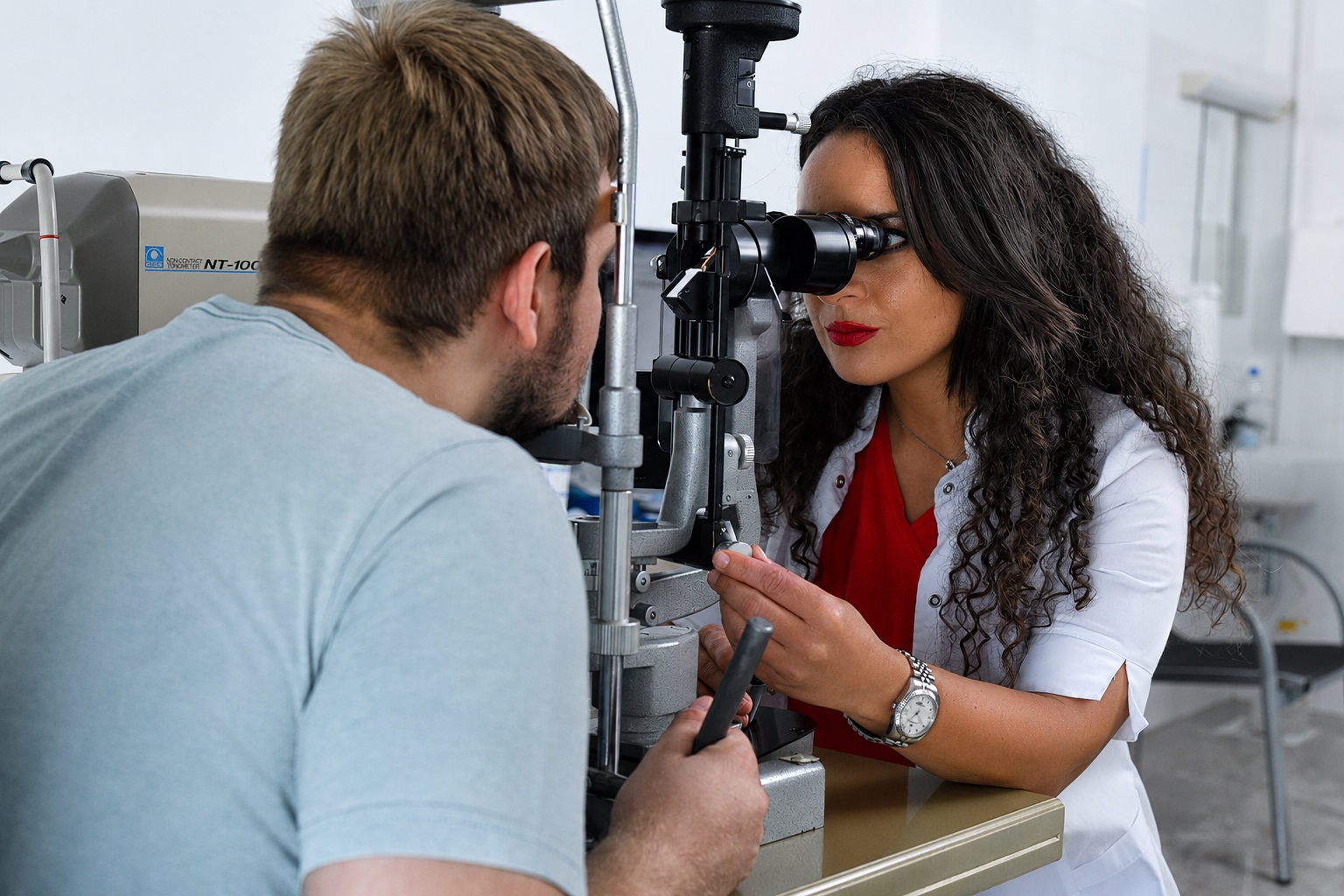
It first involves determining the refraction, that is, the dioptre, on an automatic refractokeratometer (ARK), then determining visual acuity, and prescribing glasses if there is a need for them. This is followed by an examination of the eye on the biomicroscope, which includes an examination of the anterior segment of the eye (the eyelids, the conjunctiva, the cornea, the anterior chamber, the iris and the lens of the eye), as well as an examination of the posterior segment of the eye, that is, the fundus, preferably with a dilated pupil using special lenses.
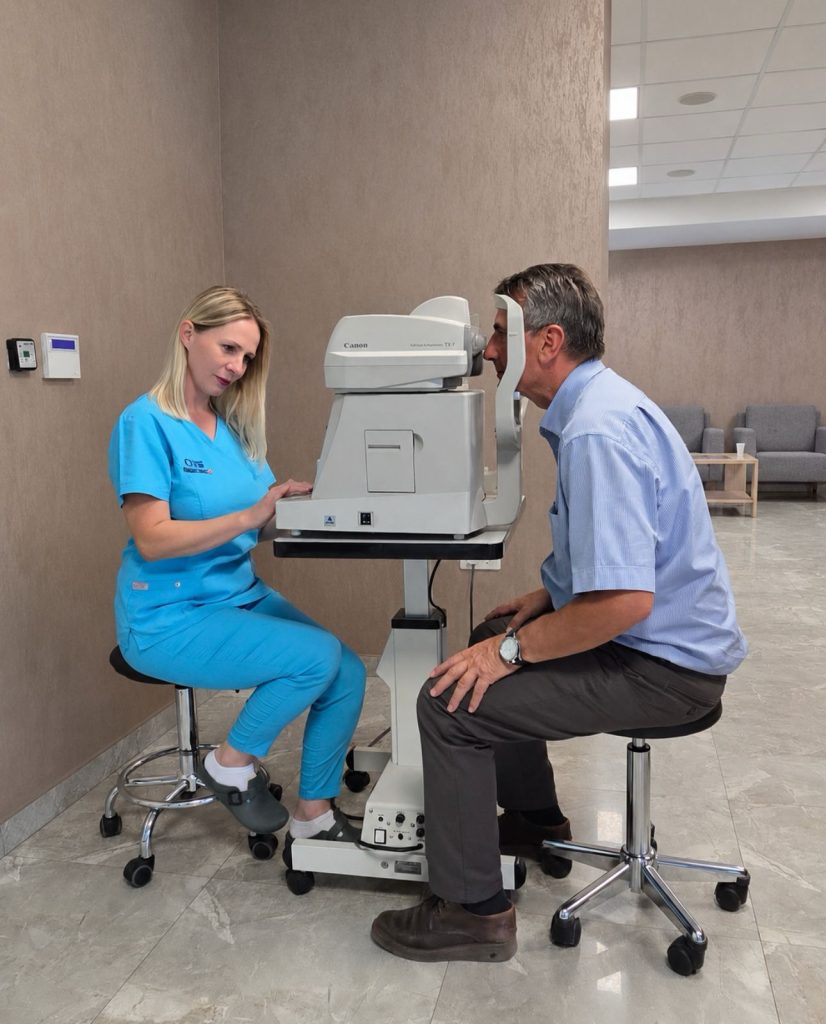
An indispensable part of every ophthalmological examination is the measurement of the eye pressure by applanation tonometry or without contact.
In addition to the procedures listed above, as part of the ophthalmological examination it is sometimes also necessary to perform a Cover test in order to establish possible strabismus, then gonioscopy (examination of the chamber angle) if glaucoma is suspected, because it is necessary to determine which type of glaucoma is involved. Then, in diseases of the eye socket it is necessary to perform exophthalmometry, and in case of suspected diseases of the macula and the optic nerve, testing of colour vision..
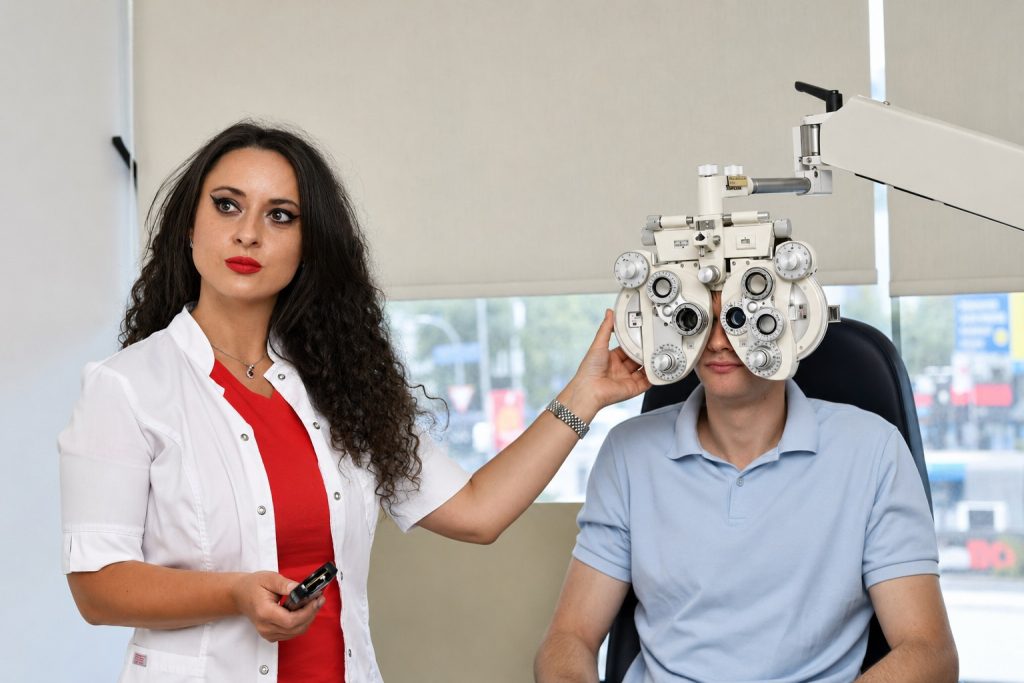
After an ophthalmological examination carried out in such detail, the diagnosis of the eye disease is usually reached, that is, the existence of an eye disease is ruled out. However, it is often also necessary to perform additional diagnostic procedures which are an indispensable part of the complete diagnostics and of monitoring the treatment of eye diseases.
Appointments
Not sure which examination you need?
Tell us about your symptoms and our team will help you book the right first step.