
Eye clinic / patient information
Cataract
Information about the examination, diagnostics and the possible next steps at the VIDAR-ORASIS SWISS clinic.
Cataract surgery
What is a cataract and how does it develop?
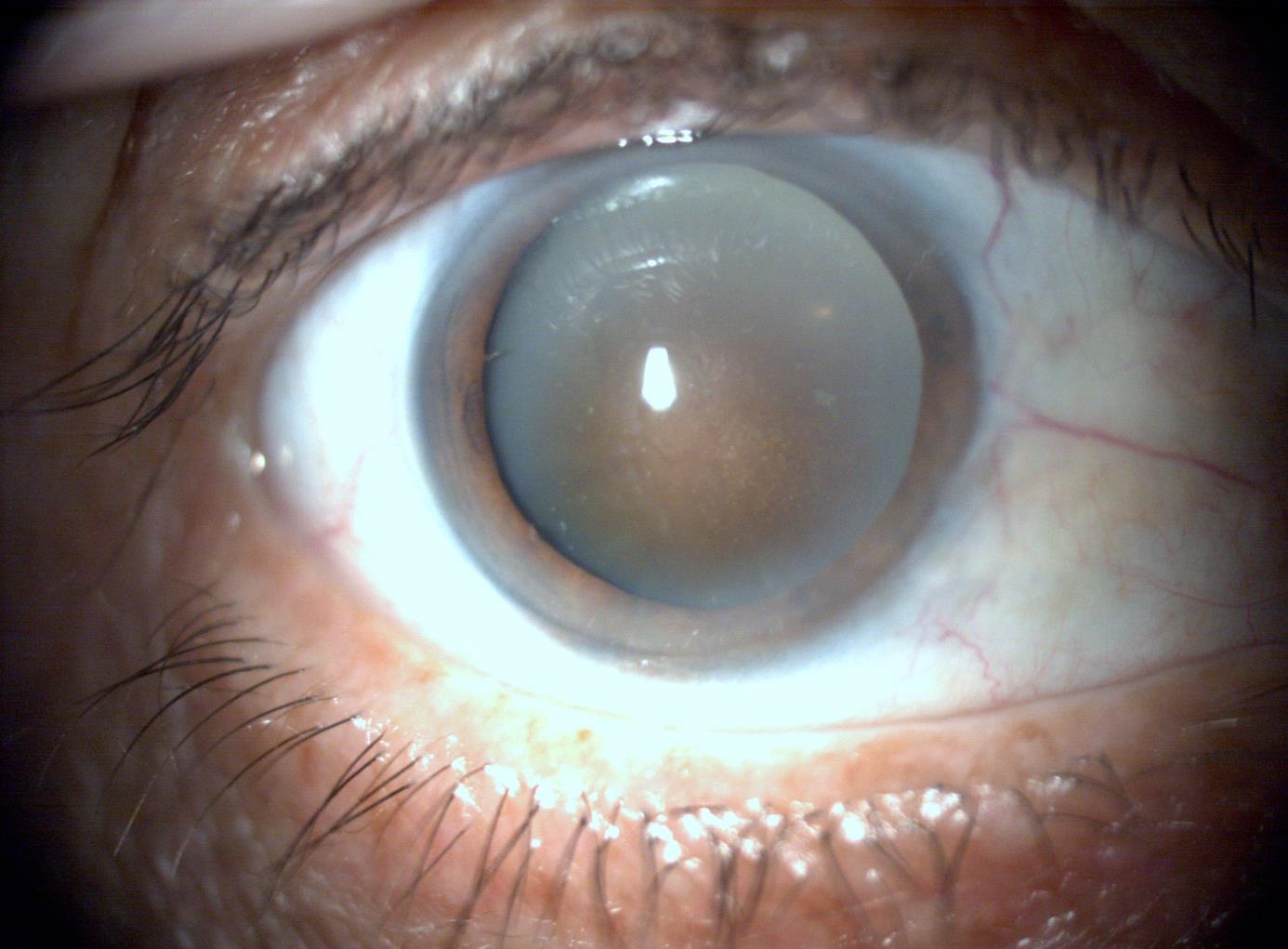
A cataract is a clouding of the eye lens. When clouding of the lens appears it usually intensifies over time, so a cataract has its own progression. The causes of cataract development are various, so there are: acquired cataract and congenital cataract. Acquired cataracts are most often the consequence of the ageing process, then of some other eye disease, for example glaucoma, or of some general disease, for example diabetes. Senile cataract, which is also the most common, is the consequence of biochemical changes in the eye lens that appear with the ageing process. A congenital cataract develops when a certain harmful agent acts on the foetus during pregnancy, so the newborn is born with a cataract.
Does a cataract affect both eyes? Why?
Senile cataract usually affects both eyes at the same time because with the ageing process similar biochemical changes occur in the lens of both eyes. With other types of cataract this does not have to be the case. For example, there are cataracts that are the consequence of an eye injury, so called traumatic cataracts, which appear only in the injured eye and they belong to the group of acquired cataracts.
What are the symptoms of a cataract?
The main symptom of a cataract is weakening of vision, although not always, so the patient should be told that he has a cataract when it leads to weakening of vision. Weakening of vision can be of various degrees from mild to very severe, where visual function is reduced only to a preserved sense of light when we speak of a mature cataract.
How is a cataract treated?
The only successful way of treating a cataract is surgical intervention. The modern surgical method of treating a cataract is the method of phacoemulsification with the implantation of an artificial lens into the eye. It can be said that today the problem of cataract is easily solvable, especially if the patient sees an ophthalmologist in time.
When and to whom is the operation recommended?
Cataract surgery should be recommended to every patient in whom the cataract causes such a weakening of vision that consequently there is also a reduction of functional, that is, working ability of the patient. In our ophthalmological practice cataract surgery is indicated when the visual function of the eye falls below 50 percent. However, there are patients, usually younger ones, in whom even a mild weakening of vision significantly reduces working ability, so in them early cataract surgery should be undertaken.
What does cataract surgery look like?
Cataract surgery by the phacoemulsification method is performed under local, most often drop, anaesthesia. During this method, through a small incision in the cornea, an ultrasound probe enters the eye, more precisely the eye lens, and the lens masses are broken up and aspirated by the probe, after which the lens capsular bag, in which the lens masses were, remains empty. The next step in the operation is the implantation of an artificial foldable lens into the space of the capsular bag. The whole operation is performed through a small incision in the cornea and usually lasts about 15 minutes.
What types of artificial (intraocular) lenses exist?
There are various types of artificial lenses, depending on their optical characteristics. Most often monofocal lenses are implanted, with which good distance vision is achieved after cataract surgery, but after the operation it is necessary to wear spectacles for near vision (reading). There are also Premium lenses which have better optical characteristics and with their implantation the following is achieved: with a multifocal lens good vision both at distance and at near; with an EDOF lens (extended focus) good vision both at distance and at intermediate distance (for the computer); with an aspheric lens excellent distance vision and better quality of vision at intermediate distance. Which lens will be implanted is agreed between the ophthalmic surgeon and the patient, depending on what the patient wishes in terms of postoperative vision. Premium lenses are subject to an additional charge.
What are the possible complications of this operation?
For an experienced ophthalmic surgeon the frequency of complications occurring during cataract surgery is minimal and is below 1%. Significant complications include rupture of the posterior capsule of the lens capsular bag, where an experienced ophthalmic surgeon implants the artificial lens in an alternative place in the eye, the so called sulcus, so this complication usually passes without significant consequences. Serious complications include the dropping of lens masses onto the ocular fundus and the possible postoperative appearance of retinal detachment. For these serious complications there is also a solution, when a vitreoretinal surgeon is involved who performs a posterior vitrectomy.
Does the operation permanently solve the problem of cataract? When and in which patients does secondary cataract appear?
The operation most often permanently solves the problem of cataract. In a certain percentage of cases, which is not negligible, after a certain time, from several months to several years, secondary cataract appears, which is not a cataract in the true sense of the word but a clouding of the posterior capsule of the lens capsular bag in which the artificial lens is located. This problem is very effectively solved by the application of the YAG laser, with which a small opening is made in the posterior capsule, so the patient practically instantly recovers vision.
What are the trends in the world regarding the cataract operation?
In the most developed countries of the world and in our country the method of phacoemulsification with the implantation of an artificial foldable lens into the eye represents the standard surgical method in the treatment of cataract. The method that will probably replace the phacoemulsification method in the future is the method of applying the femtosecond laser, where the greatest part of the cataract operation is done by laser. This method is currently performed in a smaller number of centres in the world.
Appointments
Not sure which examination you need?
Tell us about your symptoms and our team will help you book the right first step.