
Eye clinic / patient information
Glaucoma
Glaucoma is a progressive disease of the optic nerve that is related to eye pressure. Glaucoma is called the "silent thief of sight" or the "disease of silent blindness" because it usually appears without symptoms and without discomfort, and progresses unnoticed until it leads to blindness.

What is glaucoma
Glaucoma is the second leading cause of blindness in the world, affecting around 70 million people.
The most common forms of glaucoma
There are several types of glaucoma, and some of the more common forms are: open angle glaucoma, normal tension glaucoma, pigmentary glaucoma, pseudoexfoliative glaucoma.
Open angle glaucoma
Open angle glaucoma is the most common form of glaucoma in Europe and in our country. In open angle glaucoma there is slow but permanent damage to the optic nerve. At the beginning of the disease the patient has only minor defects in the visual field which do not affect the central part of vision, so the patient has no sense that anything is happening with their sight. If glaucoma is not diagnosed and treated in time, in the final stage of the disease the central parts deteriorate and vision is lost completely.
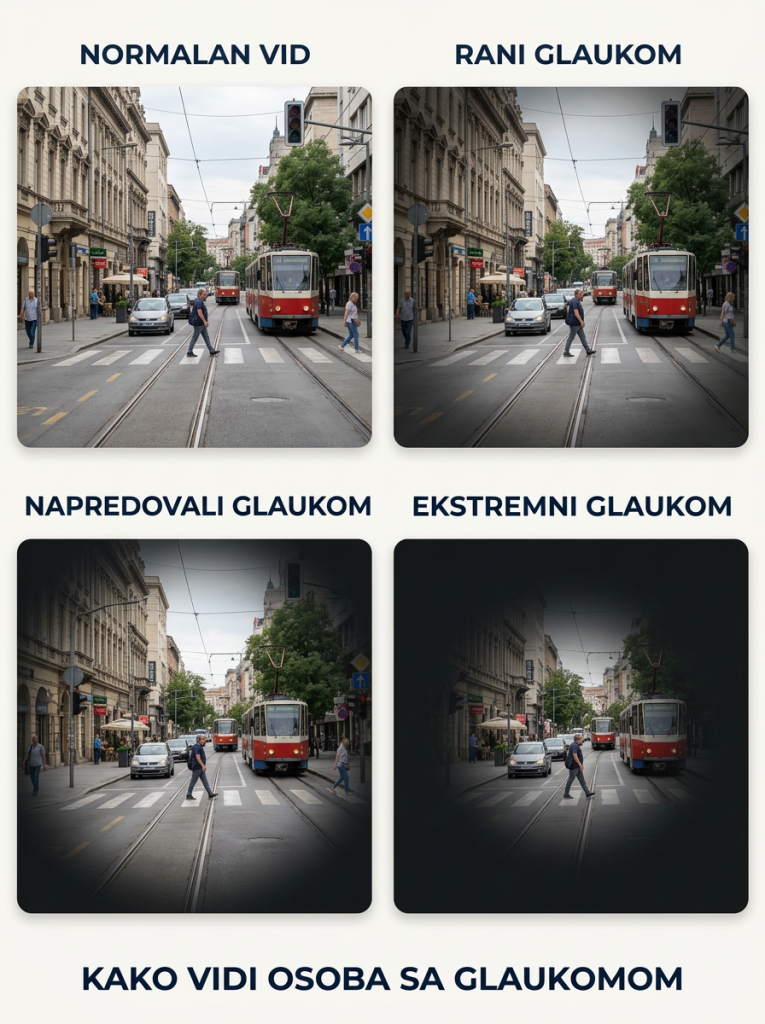
Who is at increased risk?
The following categories have an increased risk of developing open angle glaucoma: people over 40 years of age, people with glaucoma in the family, short sighted people, people with diabetes.
A preventive ophthalmological examination for glaucoma should be carried out once a year from the age of 40.
Secondary and acute glaucoma
Secondary glaucoma is a group of different types of glaucoma in which damage to the optic nerve occurs because of another disease or an injury to the eye.
When is glaucoma an emergency?
Acute angle closure glaucoma is a special type of glaucoma and represents an emergency in ophthalmology, because eye pressure reaches very high values, so it is accompanied by redness of the eye, a drop in vision, pain in the eye, headache, nausea and even vomiting.
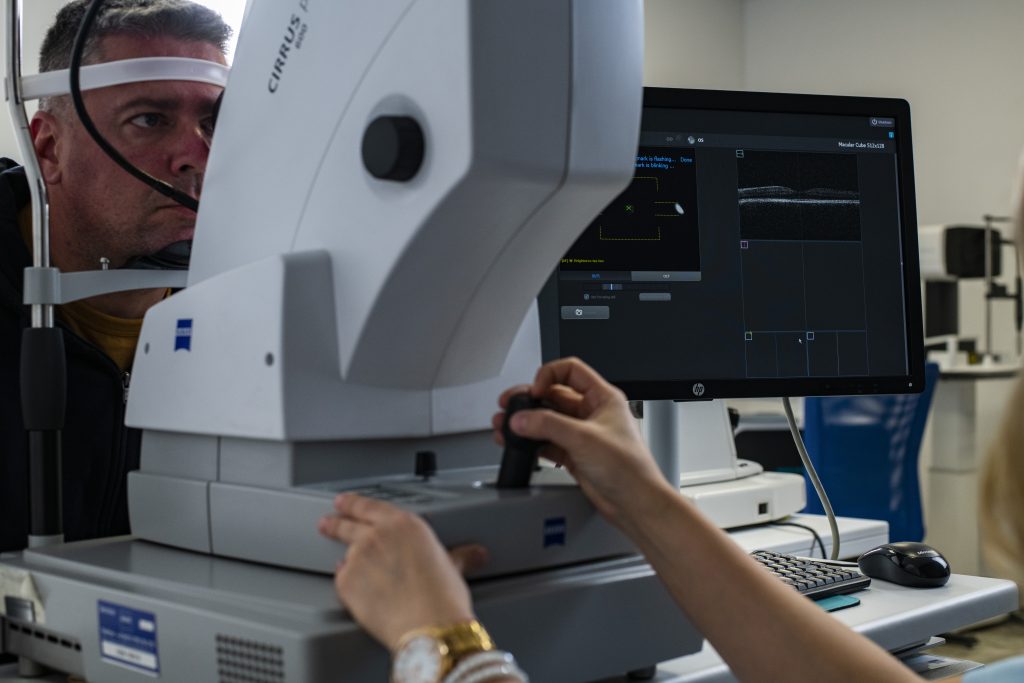
How glaucoma is diagnosed
When an ophthalmological examination raises the suspicion of glaucoma, additional glaucoma diagnostics are required in order to confirm the disease and to monitor the progression of the disease and the effect of therapy over time. Glaucoma diagnostics include: the daily curve of eye pressure, computerised visual field testing, which is an unavoidable procedure used to diagnose glaucoma and to monitor its treatment. If necessary, additional diagnostic methods are performed as well: OCT of the optic nerve, pachymetry.
Treatment and monitoring
Once the diagnosis of glaucoma has been made, the ophthalmologist proposes the best therapy to protect your sight, which can be medical with the use of drops, laser or surgical.
With appropriate therapy glaucoma can be slowed down, or further loss of visual function can be stopped. That is why early detection is the basic prevention of blindness caused by glaucoma.
Appointments
Not sure which examination you need?
Tell us about your symptoms and our team will help you book the right first step.