
Eye clinic / patient information
Laser vision correction surgery
Information about the examination, diagnostics and the possible next steps at the VIDAR-ORASIS SWISS clinic.
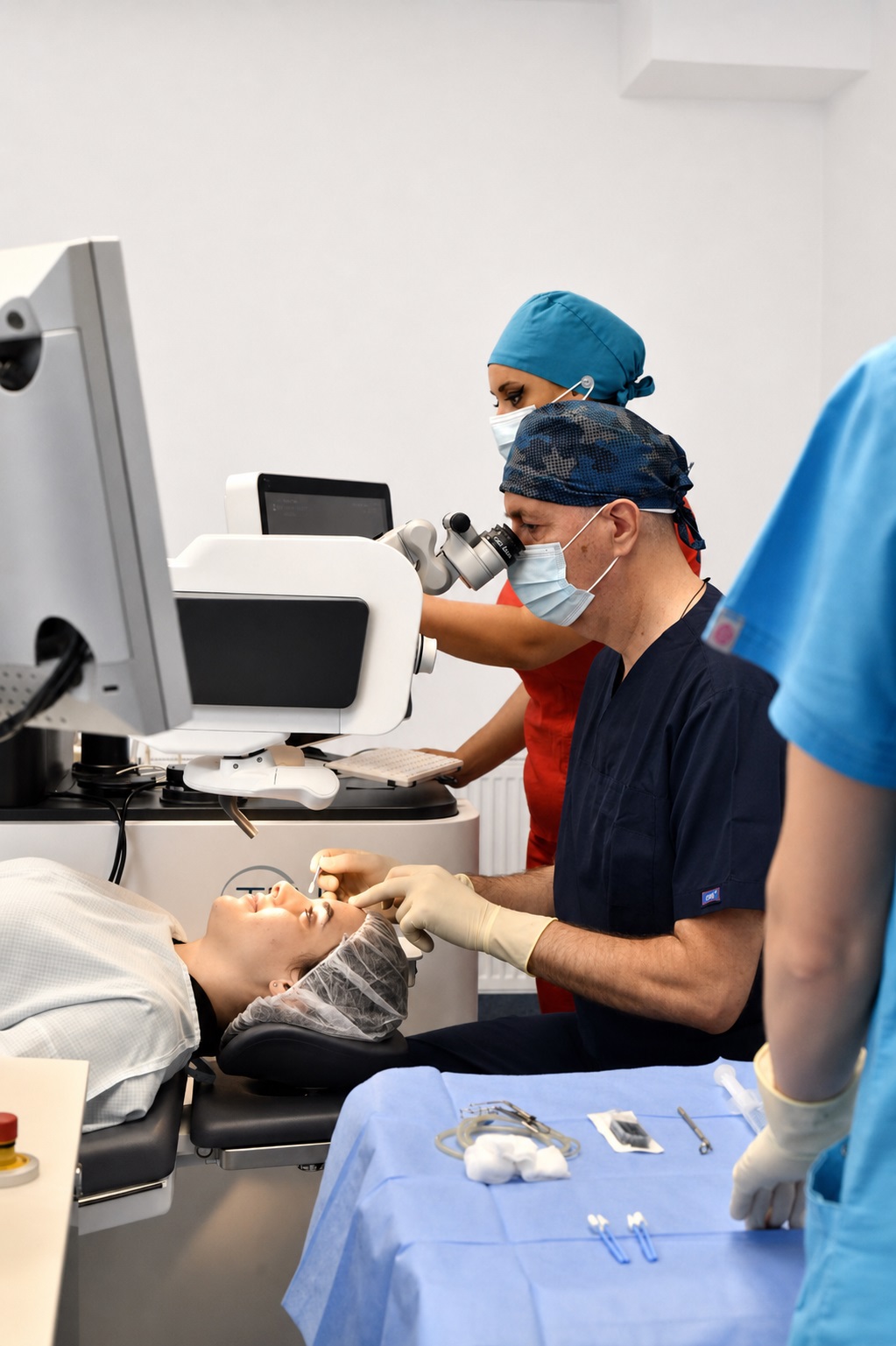
Who is a candidate for laser vision correction?
Laser vision correction surgery has been performed in the world for more than 35 years. This is a very successful surgery, of course if it is assessed on whom it can safely be performed. It is also a surgery in which there are always novelties, both in terms of diagnostics and in terms of the adoption of new surgical methods of dioptre correction.
A candidate for laser vision correction is every person, preferably older than 20 years, whose distance dioptre has not changed in the last year. The person must be healthy, both ophthalmologically and in a general sense. There are also indications, that is, dioptre values that the excimer laser can correct, and these are short-sightedness, that is, myopia up to -10 dioptres, hypermetropia up to +4 dioptres and astigmatism up to 5 dioptres.
Which methods are used for performing this surgery?
For the purpose of correcting the distance dioptre, the LASIK and PRK methods are most often applied. The LASIK method has a wider indication range, while the PRK method has a narrower indication range and it is reserved for thinner corneas. Namely, before the operation every person undergoes a detailed eye examination, within which the imaging of the structure of the cornea and its thickness is especially significant, and this information is very important for whether this surgery can be performed on the person and, if it can, which method, whether LASIK or PRK. The excimer laser itself, which is used with all the methods, when it acts on the cornea makes it thinner and changes its curvature and thus corrects the existing dioptre. Therefore, the information about the thickness of the cornea is very important for the choice of the method of dioptre correction itself.
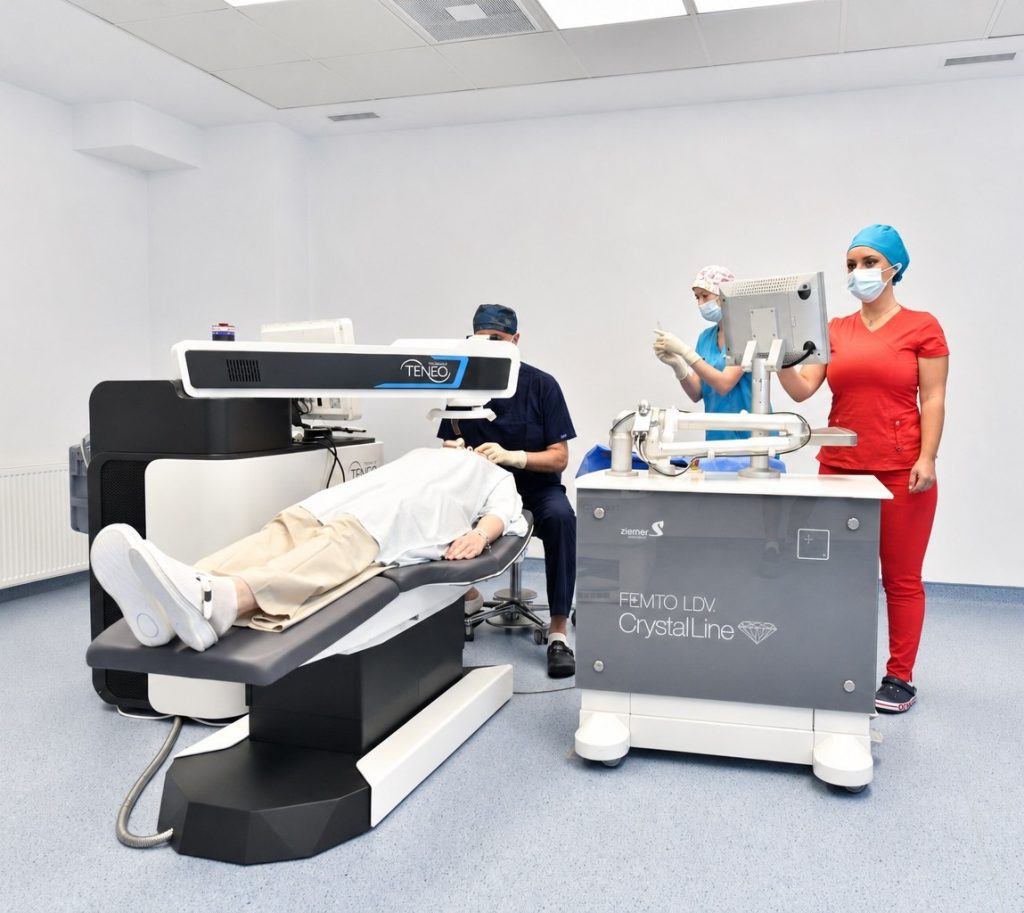
Can the dioptre for near vision, that is, for reading, be corrected with the laser?
Until recently laser vision correction was done only in terms of correcting the distance dioptre. In the last ten or so years in the world, and also in our country in our Clinic, the correction of the near dioptre is also performed, that is, the removal of the need to wear reading glasses. The method is called Supracor and the candidates are persons over 45 years of age who have a need to wear reading glasses. The rules on whom the intervention can be performed are the same as for the correction of the distance dioptre. The operation, like the other methods of dioptre correction, is also performed under local drop anaesthesia, using the excimer laser, the operation lasts a couple of minutes per eye and is done as ambulatory surgery, so the person goes home immediately with open eyes.
What are the contraindications for laser vision correction?
There are ocular and general contraindications. Within the preoperative examination it is necessary to review in detail the general and ophthalmological history of every person and, of course, to perform a detailed eye examination. Within that preoperative evaluation it is determined on whom this surgery may safely be performed. Therefore, it is necessary to consider which dioptre value is in question, so that it does not by chance exceed the indication range, then how the cornea is built and whether it is thick enough for the existing dioptre to be safely removed. In addition to these facts, it is very important to exclude the existence of keratoconus, a disease of the cornea which is the main ophthalmological contraindication; further, the contraindications also include the presence of other eye diseases, for example glaucoma, uveitis, and similar. The main general contraindications are unregulated diabetes and unregulated systemic autoimmune diseases.
What are the risks of laser vision correction surgery?
With a good preoperative assessment of whether this surgery can safely be performed on the person and with good surgical skill, the risks of this surgery are minimal. As a possible but rare undesirable occurrence of this surgery, an eventual return of a small part of the dioptre should be mentioned, however this does not represent a complication because a retreatment can be successfully performed on such a person.
Does vision return completely after this surgery?
The result of the surgery is the following: as clearly as the person saw before the operation while wearing glasses, that is how clearly he will see after the operation as well, but without glasses. If we speak about the Supracor method of correcting the near dioptre, the effect is immediate, that is, immediately after getting up from the operating table the person can clearly read, without glasses, even the smallest letters of a reading text.
Appointments
Not sure which examination you need?
Tell us about your symptoms and our team will help you book the right first step.