
Eye clinic / patient information
Age-related macular degeneration (AMD)
Age related macular degeneration is a degenerative disease that is one of the leading causes of vision impairment in the population, at the global level. The disease occurs more often in the population over 50 years of age.
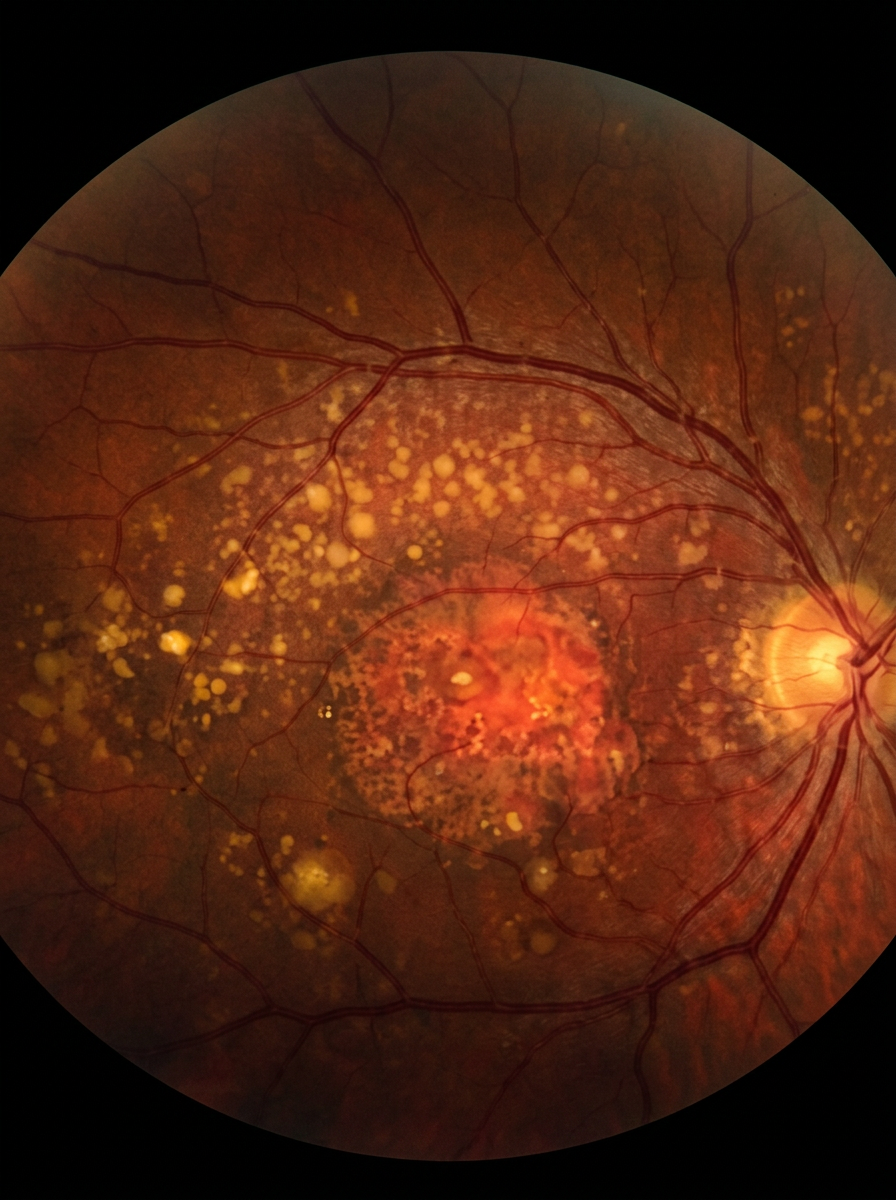
The diagnosis of age related macular degeneration (ARMD) is made by:
Examination of the ocular fundus
OCT diagnostics
FA - fluorescein angiography
Which part of the eye does it affect and what are the symptoms?
The disease affects the macular region of the ocular fundus. The macula or yellow spot is the most sensitive part of the retina, which is responsible for central vision (for reading, observing fine details, seeing colours...). With the appearance of this disease, loss of central vision occurs.
Risk factors for the development of age related macular degeneration (ARMD)
The age of the patient, race, and genetic factors play a very important role in the development of the disease. Smoking is also considered to be one of the important, preventable causes.
Types of ARMD
There are two forms of this disease:
Dry form - which affects 90% of patients and is characterised by the formation of yellowish deposits (drusen) on the ocular fundus. With further progression it can lead to atrophy in the macular region with severe impairment of central vision.
Wet form - can also develop from the previous form. This form is more serious for visual function but fortunately rarer. It is characterised by the development of new blood vessels, which bleed and leak fluid into the macula, which is followed by the consequent development of scar tissue and loss of vision.
When should you see an ophthalmologist?
A preventive ophthalmological examination should be done once a year starting from the age of 50.
Symptoms that the patient has:
Blurred vision (a drop in central visual acuity), the appearance of distortion of the observed shapes, enlargement or reduction of perceived objects and poorer perception of colours.
Treatment
The approach to treatment depends on the form of the disease.
Wet form - involves the intraocular application of anti-VEGF drugs (Avastin, Eylea, Vabysmo). These drugs are administered in the operating theatre by an ophthalmologist and prevent the development of and leakage from the newly formed blood vessels.Dry form - large studies have shown that the use of certain supplements in the form of vitamins C, E, beta carotene, zinc, copper, lutein and zeaxanthin can reduce the risk of developing the “wet” form.
Prescription of “Low vision” aids - special magnifiers and systems that enable relative rehabilitation of visual function. These miniature telescopic systems are built into a visual aid (spectacles) in selected patients with compromised visual function in both eyes.
Appointments
Not sure which examination you need?
Tell us about your symptoms and our team will help you book the right first step.